
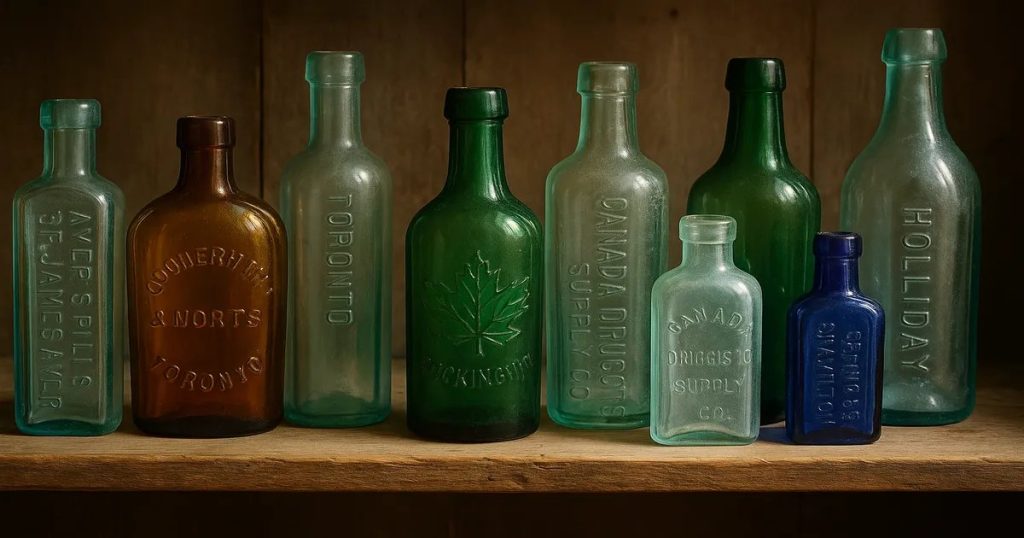
Canada’s rich history of glassmaking and trade has left behind a treasure trove of collectible bottles that tell the story of the nation’s growth. From the cobalt blue medicine bottles of Montreal’s apothecaries to the amber whiskey flasks of Ontario’s early distilleries, Canadian antique bottles offer collectors a fascinating window into the country’s past.
Why Collect Canadian Bottles?
Canadian bottles are prized for several reasons. Many were produced in limited quantities by small regional glassworks, making them inherently rare. The embossed lettering on these bottles — often featuring the names of long-vanished businesses — provides a direct connection to local history that few other collectibles can match.
Unlike their American counterparts, Canadian bottles often reflect bilingual heritage, with both English and French text appearing on labels and embossing. This dual-language feature adds a unique dimension to collecting and helps authenticate pieces with Canadian provenance.
Key Categories of Canadian Bottles
Medicine & Apothecary Bottles
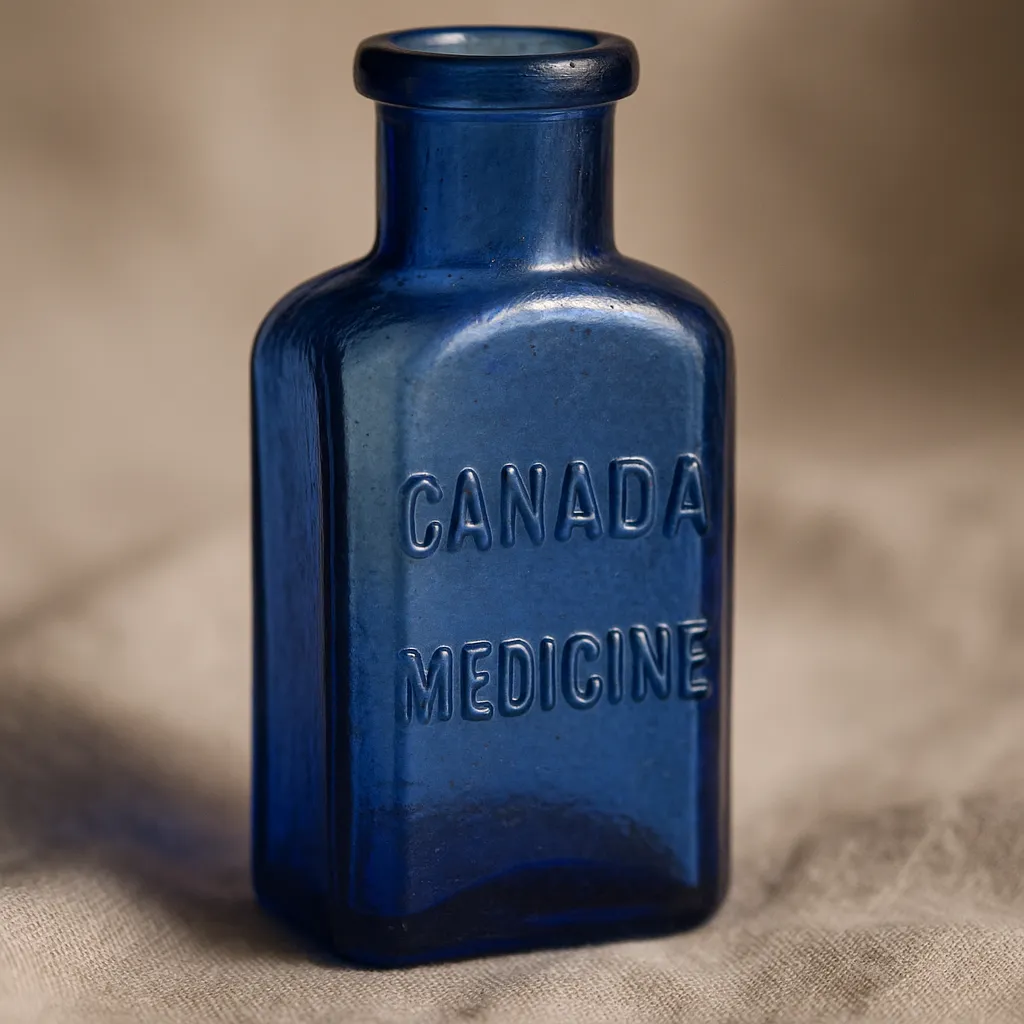
Perhaps the most sought-after category, Canadian medicine bottles from the 1850s–1920s come in stunning colours. Cobalt blue bottles from Montreal pharmacies like “Dr. J.O. Chabot” and “Lyman Sons & Co.” command premium prices. Look for pontil marks on the base — a telltale sign of hand-blown production predating the 1860s.
Whiskey & Spirits Flasks
Canadian whiskey has been world-renowned since the 19th century, and the bottles that held these spirits are equally celebrated. Early amber and olive-green flasks from distilleries like Gooderham & Worts (Toronto) and Joseph E. Seagram (Waterloo) are highly collectible. Strap-sided flasks with applied tops from the pre-Confederation era (before 1867) are especially valuable.
Soda & Mineral Water Bottles
The late 1800s saw a boom in Canadian mineral water and soda companies. Bottles from companies like “John H. R. Molson” (yes, the beer family also bottled soda water), “Charles Wilson” of Toronto, and various Maritime province spring water companies are actively traded. Hutchinson-stoppered bottles and blob-top sodas are the most desirable.
Authentication Tips
Authenticating Canadian bottles requires attention to several key details:
- Glass colour and clarity: Genuine antique glass has subtle imperfections — tiny bubbles, slight waviness, and colour variations that modern reproductions rarely replicate.
- Mould seams: The height of mould seams on the neck indicates production era. Seams stopping below the lip suggest pre-1900 manufacture; seams extending over the lip indicate machine production (post-1910).
- Pontil marks: A rough or polished pontil scar on the base indicates hand-blown production, typically pre-1860s for Canadian bottles.
- Embossing style: Canadian bottles often feature distinctive serif typefaces and may include the city name in both English and French.
- Base markings: Look for maker’s marks from known Canadian glass manufacturers like Hamilton Glass Works, Burlington Glass Works, or Dominion Glass Company.
Where to Find Canadian Bottles
The best sources for Canadian antique bottles include:
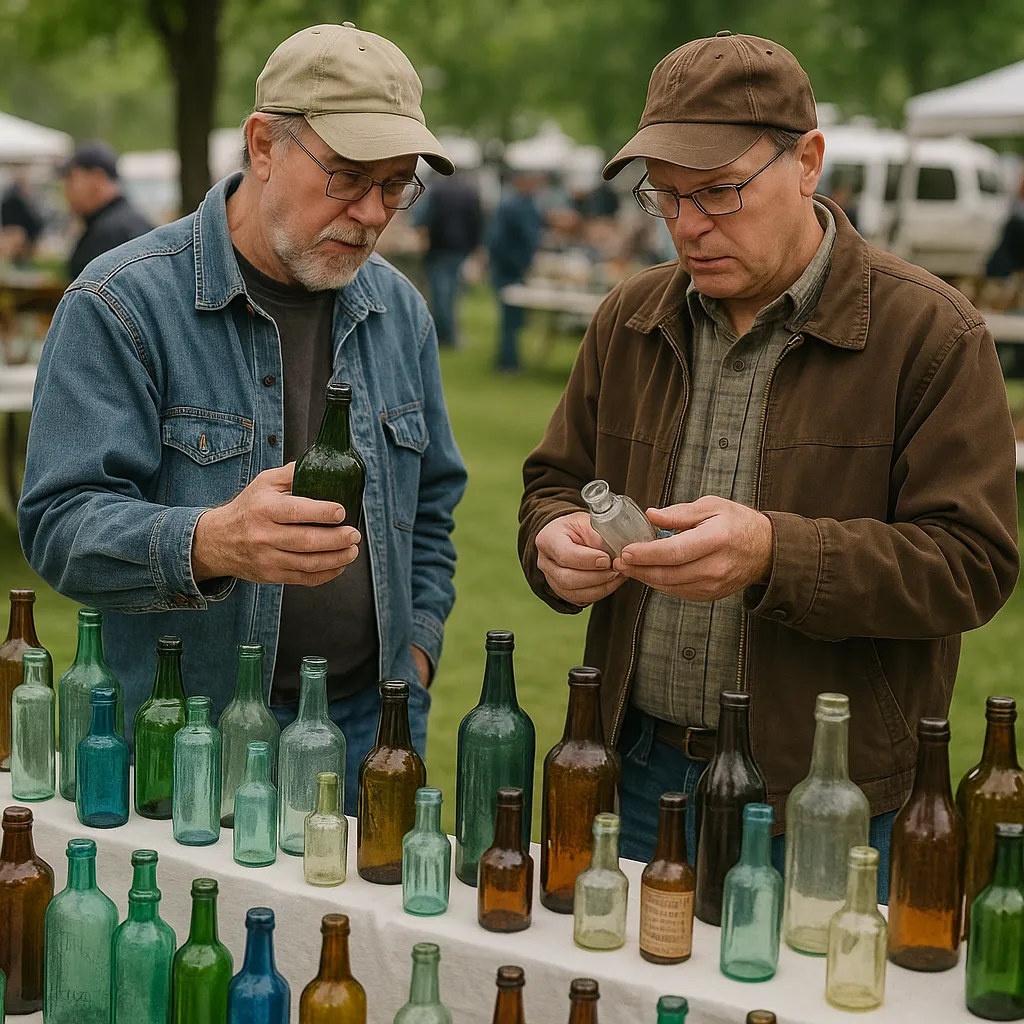
- Bottle shows: The Ontario Bottle Collectors’ annual show and the Canadian Antique Bottle & Collectibles Show are premier events.
- Privy digging: With proper permissions, old privy (outhouse) sites yield remarkable finds, as bottles were commonly disposed of there.
- Estate sales: Many significant collections come to market through estate sales, particularly in Ontario, Quebec, and the Maritime provinces.
- Online auctions: Specialized auction houses increasingly feature Canadian bottle lots, making it easier for collectors nationwide to participate.
Building Your Collection
For newcomers, I recommend starting with a specific focus — perhaps bottles from your local region or a particular category like soda bottles. This approach allows you to develop expertise in a manageable area before expanding. Keep detailed records of each acquisition, including provenance, purchase price, and condition notes.
Join a local bottle collecting club if one exists in your area. The Canadian communities are remarkably welcoming and knowledgeable. Organizations like the Ontario Bottle Collectors and regional clubs across the provinces regularly hold meetings, swaps, and educational events that are invaluable for both new and experienced collectors.
Canadian antique bottles represent an affordable entry point into antiques collecting, with many excellent pieces available in the $20–$200 range. Premium specimens — particularly early pontilled bottles, rare colours, or bottles from historically significant businesses — can command prices in the thousands, making this a hobby with genuine investment potential.
